We used AI to help build a tool that runs without AI.
When we prepare articles, catalog pages or sales decks for industrial tooling, we keep needing simple images of cutting tools.
Not CAD. Not production drawings. Not vendor photos with someone else's brand. Just clear illustrations: drill, end mill, insert, dimensions, basic geometry.
At first this feels like a content problem.
Find a picture. Crop it. Clean it. Use it once. Or ask an image generator. Get one nice result, then ask for the next tool and watch the style, scale and geometry move.
Fine once or twice. Bad when the task returns every week.
We also had a constraint: we were not going to model every tool family in CAD or build full engineering drawings. We needed marketing illustrations, not engineering truth.
So we changed the question.
Could we describe a cutting tool in structured data and let software draw it?
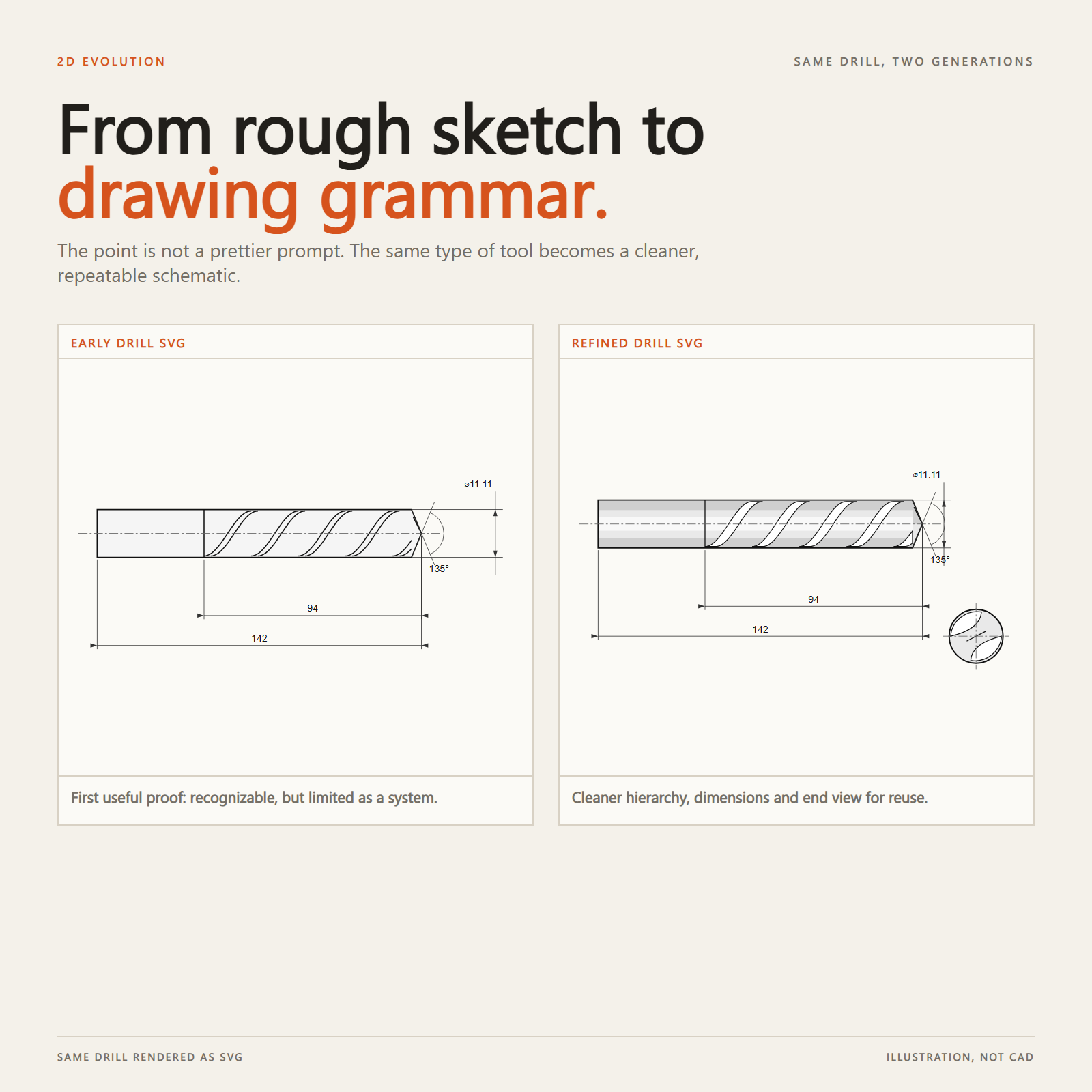
The first useful result was a rough 2D SVG of a drill. Not beautiful, but important: it gave us a place to encode rules.
Outline. Flute hint. Leader lines. Dimension labels. End views where useful. And the boundary: schematic illustration, not CAD.
Once those rules moved into code, the image stopped being a one-off asset. Change the input, and the renderer changes the drawing. Improve the renderer, and the next drawings improve with it.
For 2D, the strongest claim is concrete: identical input produces byte-identical SVG output. No prompt drift.
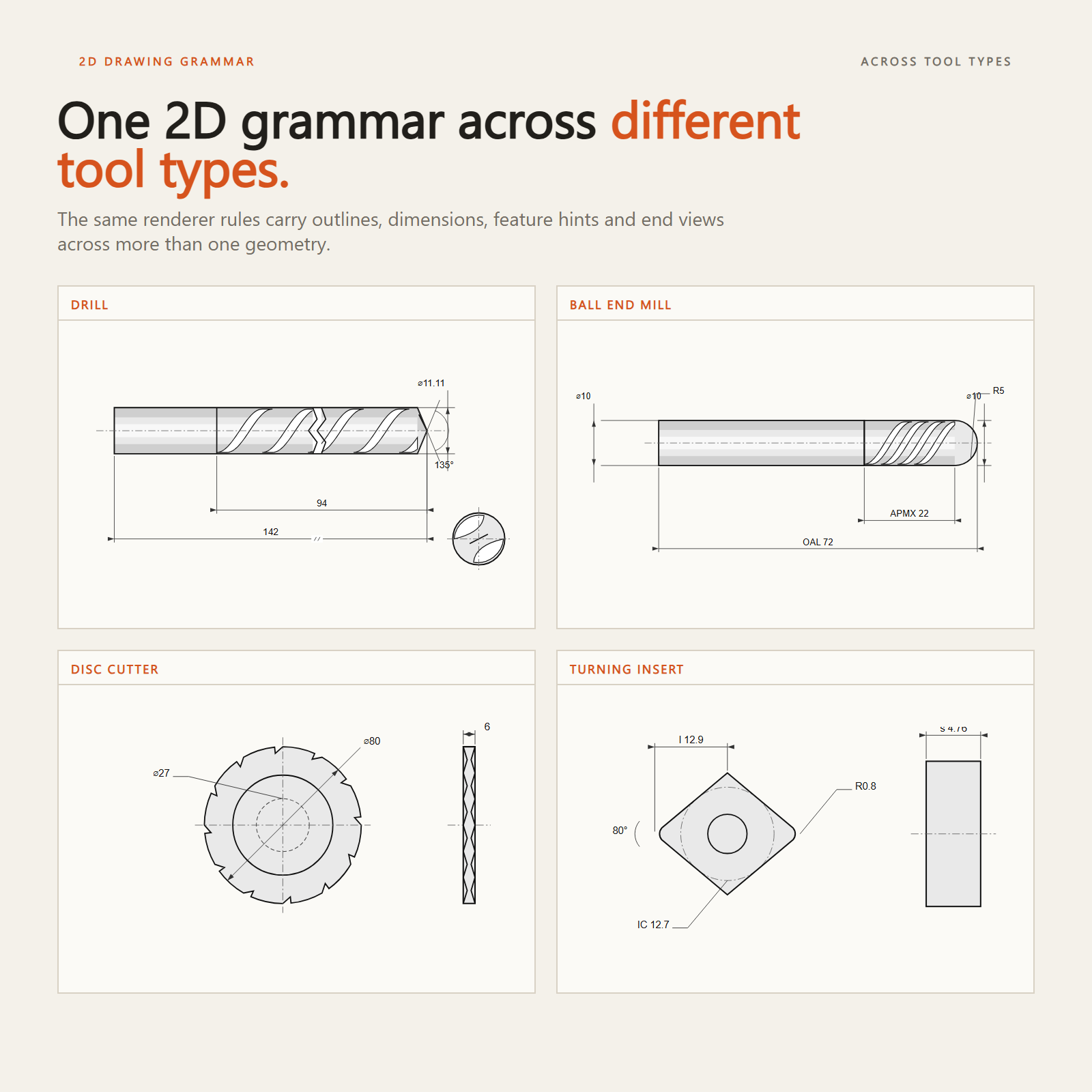
Then we began moving the same logic into 3D. That part is still work in progress. It is programmatic 3D direction, not a CAD substitute. But the path is similar: structured attributes, generated geometry, controlled lighting, reusable product-style renders.
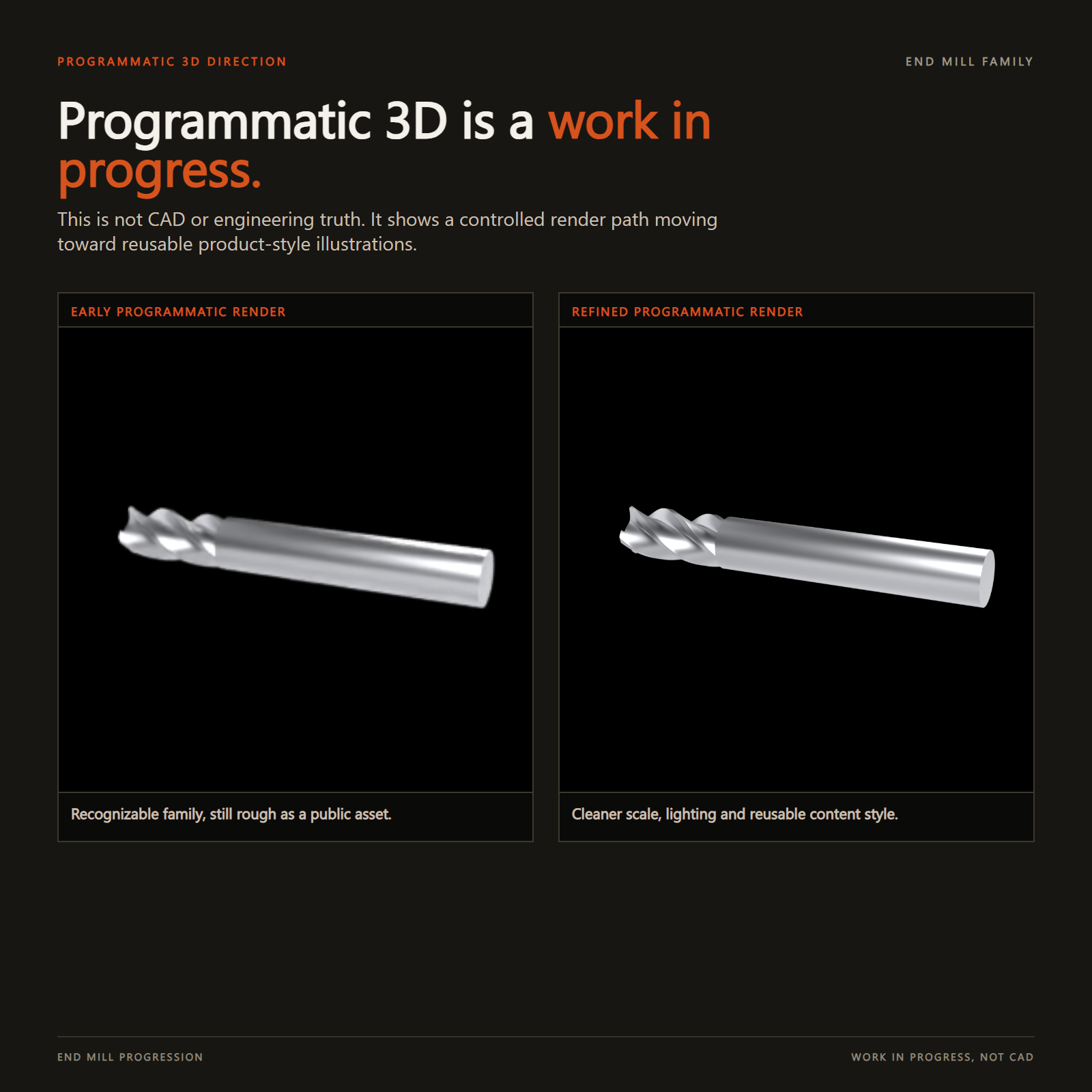
At render time, the tool is not calling an LLM. It is not asking an image generator to invent a picture. It is running software we can inspect, change and improve.
AI helped us think through the drawing grammar, write parts of the renderer and iterate faster. But the recurring task moved into code.
That is the lesson for me.
If a task is truly one-off, a prompt may be enough. If it returns every week, every catalog, every article or every sales pack, it probably deserves a tool.
AI is not the product. Faster, cleaner and more repeatable industrial work is.
What recurring task are you still solving one prompt at a time?